Nursery sleep safety · Mattress guide
Naturepedic Crib Mattresses: Understanding Firmness, Fit, and Materials
A crib mattress is one of the nursery’s most important surfaces, though it is rarely the most noticeable. The key questions are practical: Is it firm and flat? Does it fit the crib securely? Can you verify how it is made and how it should be cared for? This guide explains what to assess when considering Naturepedic crib mattresses—and how to keep safety, rather than marketing language, at the center of the decision.
Published November 5, 2026
Start with the sleep surface, not the label
A nursery mattress may be described as organic, breathable, natural, or thoughtfully engineered. Those words can help frame questions about materials, but they do not replace the fundamentals of infant sleep safety. The mattress must be designed for the specific crib, fit snugly, and present a firm, flat surface covered only by a fitted sheet made for that mattress.
For every sleep, place a baby on their back in a crib, bassinet, or play yard that meets current safety standards. Keep the sleep space clear: no pillows, quilts, loose blankets, stuffed toys, positioners, or padded accessories. A firm surface should not sag or form a hollow beneath the baby. These basics apply regardless of a mattress’s price, brand, filling, or certification.
Naturepedic offers crib mattresses in a range of constructions and materials. Specifications can differ by model and may change over time, so use the current product label, manual, and manufacturer information for the particular mattress you are evaluating. Do not assume that a feature advertised for one model is included in another. When in doubt, ask the manufacturer to clarify the exact model’s dimensions, construction, certifications, cleaning directions, and intended use.
This distinction matters because “natural” is not a safety rating, and “organic” does not tell you whether a mattress fits a particular crib. Safety and comfort are assessed through different kinds of information: crib and mattress compatibility, applicable regulatory requirements, construction details, and relevant material certifications.
What firmness means for a crib mattress
Adults often associate comfort with cushioning. For an infant crib mattress, the priority is different: a firm, flat, even surface. A mattress that feels pleasantly soft to an adult hand may be too yielding for an infant sleep space. Firmness helps reduce the risk that a baby’s face will sink into the surface, while a flat plane avoids dips or raised contours that could affect positioning.
There is no need to judge firmness by pressing briefly on the mattress and guessing how it will feel to a sleeping baby. Follow the mattress maker’s instructions and the applicable safety requirements for the model. Check that the mattress is intended for infant use, has no unusual sagging or damage, and lies level within the crib. If it has adjustable infant and toddler sides, confirm which side is intended for the baby’s age and follow the model-specific directions. A toddler side is not a reason to use a soft mattress for an infant.
Labels such as “extra firm,” “supportive,” or “comfort layer” can be useful descriptions, but they are not a substitute for checking the product’s intended age range and safety information. Parents should not add a topper or pad to make a mattress softer, more breathable, or more comfortable. Extra layers can alter the sleep surface and may introduce gaps or loose material.
Firmness is also not the same as a promise to prevent a health condition or guarantee better sleep. A mattress can be one part of a safe sleep environment, but it cannot replace back sleeping, an uncluttered crib, appropriate room conditions, or advice from a qualified health professional when a baby has individual medical needs.
Fit: the quiet detail that matters every night
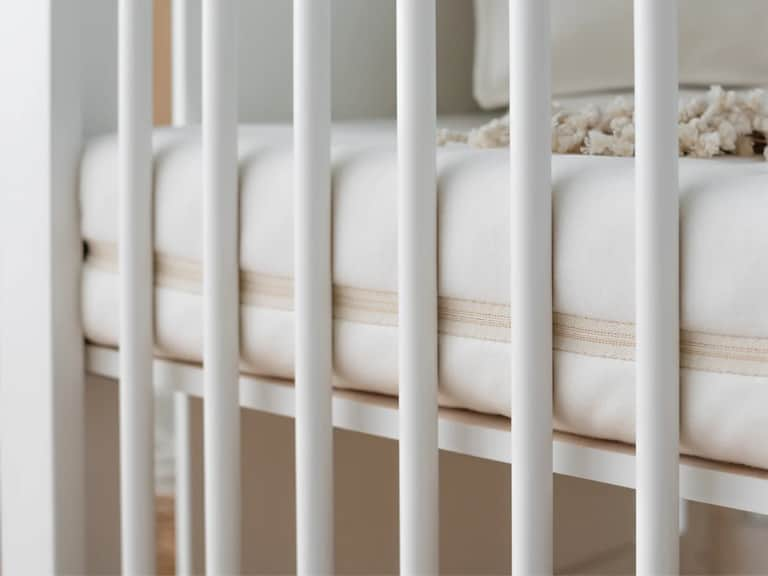
A mattress can be well made and still be unsuitable for a crib if the dimensions do not match. The mattress should fit the crib snugly, without a substantial space between its edges and the crib sides. Check the crib’s manual for the mattress dimensions it accepts, then compare those measurements with the exact mattress model—not just the broad label “standard crib mattress.” Manufacturing dimensions and crib designs can vary.
When the mattress is in place, inspect the perimeter and corners. It should lie flat and should not bow, curl, or shift easily. A visibly wide gap is a reason to stop using that combination and contact the crib or mattress manufacturer for guidance. Do not fill a gap with rolled towels, blankets, foam, or other improvised material. Such additions can create new hazards rather than correcting the fit.
Thickness matters too. A mattress that is too thick may change the usable height of the crib’s sides or interfere with the way the crib is designed to work. Follow the crib manual’s limits, including any requirements for mattress thickness and support. If a crib has an adjustable mattress platform, lower it as directed when the child grows or begins to sit, kneel, or stand. The crib manufacturer’s instructions explain how to use those settings safely.
Fit should be checked again after setup and whenever the mattress, crib, or support components are changed. A mattress that once sat correctly may shift after a move, reassembly, or replacement of a base. Never modify the crib or mattress to force a fit. If you cannot confirm compatibility, pause use until the manufacturer can advise you.
Understanding materials and construction
Naturepedic models may use different combinations of materials and construction methods. The useful approach is to examine the specification for the particular mattress: what forms its core, what covers the core, how the surface is finished, and whether any waterproof layer or other component is present. A brand name alone cannot answer those questions.
Some families look closely at organic fibers or seek to limit particular materials in the nursery. If that describes your priorities, look for a clear materials list and check what the certification applies to. A certification may cover a fiber, a processing standard, or a finished product; the scope depends on the program. Read the certificate or ask the manufacturer which components are included. Terms such as “organic,” “non-toxic,” and “chemical-free” can be used broadly in advertising and should be supported by specific, verifiable information.
Material preferences are personal, but they should not be confused with proof that one construction is universally safer or more suitable than another. A natural fiber does not automatically make a mattress safer for infant sleep, just as a synthetic component does not by itself establish that a mattress is unsafe. The complete product’s design, compliance, condition, fit, and directions matter.
For example, an Obasan Organic Crib Mattress is a separately available crib-mattress option described as using organic Dunlop latex, coconut fiber, cotton, and wool, with dimensions stated as 28 by 52 inches and 4.5 inches thick. Its product information also describes a removable cover and spot-clean care. Those details illustrate why it is important to compare exact specifications, but they do not establish that it will fit every crib or make it a Naturepedic product. Confirm compatibility with both manufacturers before choosing any mattress.
When reviewing a Naturepedic model, keep a short record of the model name, dimensions, materials, certifications, and date of purchase. That makes it easier to distinguish one version from another and to find the right manual if care or warranty questions arise. Product descriptions may be updated, so rely on the current documentation for the item in hand.
Breathability, waterproofing, and temperature
Mattress descriptions may emphasize airflow, moisture management, or breathable construction. These features can sound reassuring, but they should not be treated as permission to add loose bedding or to place a baby in an unsafe sleep position. No “breathable” label changes the recommendation to use a firm, flat surface and keep the crib empty except for the baby and a properly fitted sheet.
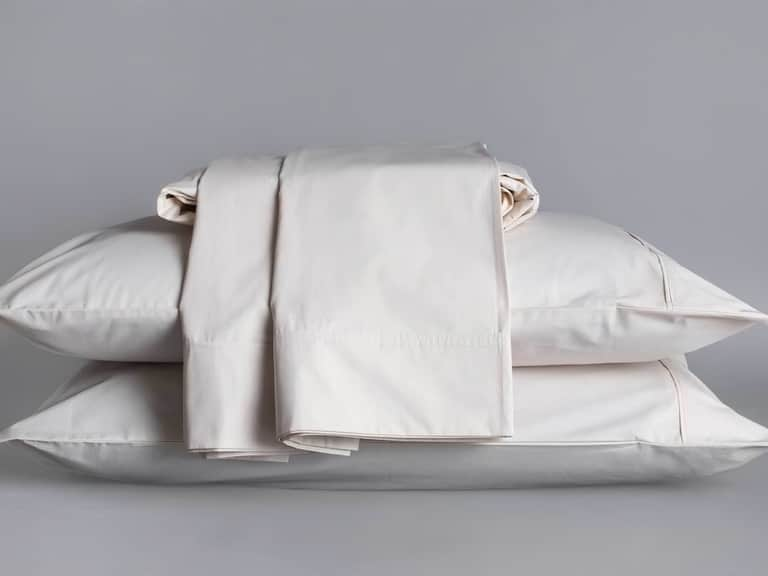
Waterproofing is another point to investigate in the specifications. A waterproof layer can help protect a mattress from spills, but the exact material and construction vary. Check whether the manufacturer allows a separate protector and whether that accessory is designed for the specific mattress. Avoid stacked pads or protectors that wrinkle, bunch, or make the fitted sheet fit poorly. The sheet should remain taut and secure.
To help a baby remain comfortable, dress them appropriately for the room and avoid overheating. Do not rely on a mattress material to regulate a baby’s temperature or prevent overheating. If you have questions about clothing, room temperature, or a baby’s particular health needs, consult a pediatric health professional. The mattress is only one element of the sleep environment.
A practical checklist before buying
Product pages can contain a lot of detail. A simple checklist helps keep the essentials visible while you compare Naturepedic models or other options:
- Confirm the exact model. Record the full name and version, not just the brand.
- Check the crib manual. Verify the mattress dimensions and thickness allowed by the crib maker.
- Compare measured specifications. Make sure the mattress is intended for that crib and fits without problematic gaps.
- Review firmness and intended use. Confirm that the model is designed for infant sleep and follow any instructions about sides or stages.
- Read the materials list. Identify the core, cover, coatings, and any waterproof components that matter to your household.
- Verify certifications. Find out which materials or processes a certification covers, and consult the certifier’s documentation where available.
- Read care and warranty terms. Understand what can be cleaned, what must not be washed, and what conditions may affect coverage.
- Check current safety information. Look for the product’s applicable compliance statements and any official recalls or notices.
Price, weight, color, and packaging may influence a family’s choice, but they belong after compatibility and safe-use information. A heavier mattress is not automatically firmer or safer; a higher price does not eliminate the need to check the fit. Similarly, a lengthy list of material claims should not distract from a missing dimension, unclear instruction, or uncertain crib compatibility.
Care, cleaning, and everyday inspection
Use the care instructions for the specific mattress. A removable cover may have different cleaning directions from the core, and a component that looks washable may not be designed for machine washing. Avoid soaking, steam cleaning, harsh chemicals, or direct heat unless the manufacturer explicitly permits them. Excess moisture can damage materials or remain trapped inside, while unsuitable cleaners may affect a cover or barrier.
Some mattresses are designed to be spot-cleaned rather than washed. If so, use only the method and cleaning agents recommended by the maker, and allow the mattress to dry completely before replacing the fitted sheet. Do not put the mattress into use while damp. If an odor, stain, or spill cannot be addressed using the approved method, ask the manufacturer for instructions rather than experimenting with solvents or sprays.
Inspect the mattress and crib periodically. Look for tears, broken seams, exposed filling, persistent dampness, unusual sagging, or a cover that no longer stays secure. Check that the mattress remains level and that the crib hardware and support base are intact. Replace a damaged or structurally compromised item rather than trying to repair it with tape, patches, or added padding.
Follow directions about the crib base as carefully as the mattress directions. A support surface must be sturdy and compatible with the crib. Do not place a mattress on an improvised platform, and do not alter a solid or slatted base unless the crib maker approves the change. The support system and mattress work together as a unit.
Questions to ask about a Naturepedic mattress
Before purchase—or whenever a detail is unclear—ask concise questions and request answers tied to the exact model. Useful questions include:
- What are the mattress’s actual dimensions and thickness, and which crib sizes is it designed to fit?
- What materials make up the core, cover, and any moisture barrier?
- Which side, if any, is intended for infant use, and how can the sides be identified?
- What safety standards or regulatory requirements does the model meet?
- Which certifications apply, and what parts of the product do they cover?
- Can a protector be used, and if so, which type is approved?
- How should each component be cleaned and dried?
- Where can the current manual, warranty, and recall information be found?
Clear answers allow a fair comparison without relying on slogans. If a product page does not address an important point, contact the manufacturer or retailer before buying. Keep the manual and proof of purchase in a place where another caregiver can find them.
Build the whole sleep space around simple principles
It is easy to spend time comparing mattress fibers and forget that safety depends on the full arrangement. Use a crib, bassinet, or play yard that meets current standards and is assembled according to its manual. Place the baby on their back for every sleep. Keep the surface firm and flat, use only a fitted sheet that fits securely, and leave soft objects and loose bedding outside the sleep area.
Caregivers may encounter conflicting advice online, especially when terms such as “breathable,” “natural,” or “supportive” are used without context. Return to current guidance from recognized public-health and pediatric authorities, and ask a pediatric professional about questions specific to a child’s health. Product marketing is not a substitute for those recommendations.
A good buying decision is often less dramatic than it appears. It is the careful match between a crib and mattress, a clear understanding of the materials and instructions, and a sleep surface that remains firm, flat, and unobstructed. Naturepedic’s range can be assessed in the same measured way as any crib-mattress line: model by model, specification by specification.
The takeaway
When evaluating Naturepedic crib mattresses, begin with the crib manual and the exact mattress specifications. Confirm a snug fit, an infant-appropriate firm and flat surface, clear care instructions, and verifiable information about construction and certifications. Materials may reflect a family’s values, but they do not replace safe-sleep practices. A correctly matched mattress, used as directed in an uncluttered crib, is the foundation of a thoughtful nursery sleep space.