Sleep & bedding
Percale or Sateen? A Practical Guide to Organic Cotton Sheets
Two cotton sheets can begin with similar fibers and end up feeling like entirely different landscapes: one crisp and airy, the other smooth and softly draped. The difference often starts at the loom. Understanding percale and sateen can help you choose organic cotton sheets that suit your room, your routines, and the way you like your bed to feel.
The weave changes the experience
Cotton is the raw material; weave is the way its yarns cross. That simple distinction has a noticeable effect on a sheet’s surface, weight, drape, and airflow. Percale and sateen are both common cotton sheet weaves, and either may be made with conventionally grown or certified organic cotton. The word “organic” describes how the cotton is grown and processed under a particular standard; it does not, by itself, tell you whether the finished fabric will feel cool, silky, crisp, or warm.
To picture a weave, imagine the lengthwise yarns, called warp, stretched on a loom, with crosswise yarns, called weft, passing over and under them. In a basic percale structure, the yarns alternate in a simple one-over, one-under pattern. Sateen uses a different arrangement, with yarns passing over several threads before going under another. Those structures leave different proportions of yarn exposed at the fabric surface, shaping the touch and appearance.
Neither weave is automatically superior. One may feel refreshing and crisp to a sleeper who dislikes clingy fabric; another may feel inviting to someone who prefers a smooth, fluid finish. The better choice is the one that works with your personal comfort, sleeping temperature, and willingness to care for it.
Percale: crisp, light, and quietly structured
Percale’s balanced, plain-weave structure gives it a matte surface and a clean, crisp hand. It is often compared to a freshly laundered shirt or the cool, taut feel of a well-made hotel bed. New percale can feel slightly firm or papery to some people, then relax with use and washing. The result is not necessarily a slick surface; it is more often a smoothness with a little texture and body.
Because percale generally has a light, open-feeling construction, many people find it comfortable in warm rooms or when they tend to sleep hot. The fabric can allow air to move through it, though the experience depends on more than weave alone. Fiber length and quality, yarn size, finishing, fabric weight, the mattress beneath the sheet, the duvet on top, and the room’s humidity all contribute. No weave can guarantee that a sleeper will stay cool, but a breathable sheet may feel less close against the skin than a heavier, more draped fabric.
Percale tends to hold a more tailored shape on the bed, with a crisp look that suits people who enjoy a neat, freshly made surface. It can wrinkle, as cotton naturally does, and its matte finish makes those creases visible. For some, the lived-in look is part of its appeal. For others, it means reaching for an iron or accepting a less polished bed after laundry day.
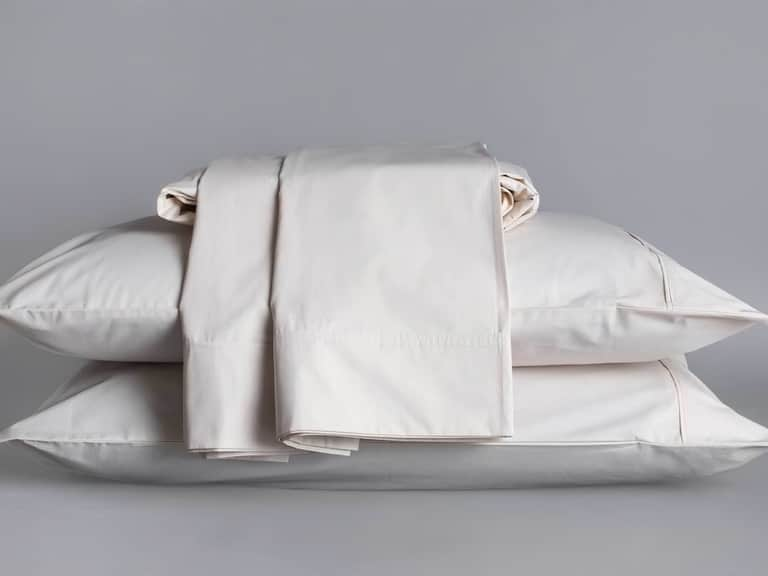
A percale set can be a useful option for people who prefer lightness, a crisp touch, or a breathable-feeling layer. As one example, the Sleep and Beyond 100% Organic Cotton Percale Sheet Set is described as a 270-thread-count GOTS-certified organic cotton percale. Its product details list machine washing and fitted-sheet pockets designed for mattresses up to 18 inches deep. These are specifications of that particular set, not universal features of percale bedding.
Sateen: smooth, fluid, and softly lustrous
Sateen is woven to bring more yarn to the surface, creating a smoother face and a gentle sheen. The fabric often feels supple and drapes more closely than percale. For sleepers who like a soft, almost silky sensation, that surface can be a pleasure. It may also feel a little warmer or more substantial, especially when compared with lightweight percale sheets of similar fiber content.
The sheen is a feature of the weave, not a coating that necessarily makes the sheet slippery. Still, sateen’s smoothness can mean less of the dry, crisp sensation some people associate with cotton. Its fluid drape can look relaxed and elegant, but it may be less sharply structured on the bed than percale.
Sateen is sometimes described as warmer, but this is a tendency rather than a rule. Fabric weight, yarn, finishing, room conditions, and the other layers on the bed all matter. A lightweight sateen may feel comfortable in many settings, while a heavier percale may not feel especially cool. If temperature is your primary concern, consider the complete bedding system and your room rather than relying on the weave name alone.
The smoother surface can also show snags, pulls, or surface wear differently from a crisp plain weave. That does not mean sateen is inherently delicate. Durability depends on the cotton, yarn quality, construction, finishing, and care. A high thread-count label by itself cannot predict how long sheets will last or how they will feel after repeated laundering.
A side-by-side comparison
| Feature | Percale | Sateen |
|---|---|---|
| Typical surface | Matte, crisp, and smooth with a little structure | Smoother, softer, and gently lustrous |
| Drape | Usually holds a more tailored shape | Usually falls more fluidly across the bed |
| Temperature impression | Often feels light and airy | Often feels a little more substantial or warm |
| Wrinkling | Cotton creases are visible against the matte finish | Can wrinkle too, though the surface may look smoother at first |
| Often suits | People who like crispness and a breathable-feeling sheet | People who prefer softness, drape, and a smooth hand |
These are broad tendencies, not guarantees. Two sheets labeled with the same weave may differ substantially because of fiber, yarn, finishing, and fabric weight. If possible, touch the fabric or review a retailer’s material and care details before deciding.
What organic cotton does—and does not—tell you
Organic cotton can matter to people who want to understand the agricultural and processing standards behind their bedding. Certifications can provide a more specific basis for evaluating claims than broad terms such as “natural” or “eco-friendly.” GOTS, the Global Organic Textile Standard, is one certification consumers may encounter on textile products. Its criteria address organic fibers and include environmental and social requirements across certified processing stages. When a product carries a certification claim, check what the certification applies to and whether the claim is supported by current documentation.
Organic certification does not dictate the weave. Organic cotton can be spun and woven into percale, sateen, jersey, and other fabrics. Nor does the word “organic” automatically mean that a finished sheet is free of every substance a particular person may be sensitive to. Finishes, dyes, detergents, and individual sensitivities are separate considerations. If you have a known allergy or skin condition, consult a qualified health professional about your needs and review product details carefully.
Responsible purchasing can also involve asking practical questions: Is the fiber claim certified? What is the fabric made from? Are dyes or finishes described? Can the maker provide care instructions and information about sourcing? Clear, specific answers are more useful than an impressive-sounding label with no explanation.
Thread count is only one clue
Thread count measures the number of threads in a square inch of fabric, but the figure is not a complete measure of comfort or quality. Counting conventions and yarn construction can differ, and an especially high number does not automatically mean a better sheet. A fabric made with good-quality yarn and a suitable weave may feel more comfortable and wear better than a fabric chosen mainly for a large number on its label.
Instead of making thread count the deciding factor, look at the full picture: fiber and certification claims, weave, fabric weight if provided, finishing, stitching, fit, and care guidance. Consider whether the fabric feels pleasant to you and whether its construction suits how you use it. A crisp percale does not need an extravagant thread count to deliver the characteristic percale feel, and a sateen’s softness cannot be judged from a number alone.
Fit matters in everyday life, too. Measure the mattress, including any topper, and compare its depth with the fitted-sheet pocket specifications. A sheet that slips off or pulls tight can undermine comfort regardless of its weave. If you use an adjustable bed, check whether the sheet set is designed for that configuration and whether its fitted pieces match your mattress dimensions.
Choosing for your room and your sleep habits
Start with what you notice at night. Do you kick off blankets, wake feeling too warm, or dislike fabric that settles close against your skin? Percale may be worth considering for its crisp, lightweight feel. Do you enjoy a smooth sheet that folds softly around the body, or prefer a bed with a more fluid, polished drape? Sateen may be a better match.
Room temperature and bedding layers can change the equation. A thick duvet, a warm mattress protector, poor ventilation, or a humid room may have more influence on comfort than a small difference in sheet weave. In a cool bedroom, sateen’s more substantial feel may be welcome. In a warm season, some sleepers may prefer percale. But personal preference varies, and no sheet weave can substitute for addressing a persistently uncomfortable sleep environment.
Think about touch as much as temperature. Some people find percale’s crispness calming and familiar; others perceive it as too stiff. Sateen can feel soothingly smooth to one sleeper and too clingy to another. Descriptive words in product listings offer a starting point, not a promise of how fabric will feel against your own skin.
When two people share a bed, preferences may differ. If replacing all the sheets at once feels uncertain, consider changing one layer first or choosing separate blankets that allow each person to adjust warmth. A pillowcase or sheet sample, where available, can help you judge texture before committing to a full set.
Care that helps sheets last
Cotton bedding benefits from care that follows the manufacturer’s instructions. Washing temperature, cycle, detergent, bleach, and drying method can affect color, hand, shrinkage, and wear. Do not assume every organic cotton sheet has identical care requirements. Read the label for the exact product, especially when a set includes several components or a special finish.
As a general habit, avoid overloading the washer so sheets can move freely, and use an appropriate amount of detergent. Excess detergent can be difficult to rinse away. High heat may stress fibers over time, so follow the specified drying guidance rather than treating hot washing or intense tumble drying as a shortcut to cleanliness. If you use bleach, verify that it is permitted; some product instructions specify non-chlorine bleach only.
Percale’s crisp texture often softens gradually with washing. Sateen’s smoothness may also change as the fabric is used and laundered. Neither needs harsh treatment to become comfortable. Line drying, when practical and appropriate for the care label, can reduce dryer wear; a low-heat setting may be a more convenient alternative. Remove sheets promptly to limit deep creasing, or iron them if a crisp, smooth appearance matters to you.
Wash bedding regularly according to your household’s needs, taking into account perspiration, pets, allergies, and other factors. Use a mattress protector if you want an additional washable barrier. Keeping sheets dry before storing them helps prevent musty odors and protects the fabric between uses.
A simple decision guide
- Choose percale as a starting point if you like a crisp, matte surface and a light, airy sensation.
- Explore sateen if a smooth hand, gentle sheen, and soft drape are more appealing than crispness.
- Look beyond the weave if you sleep too warm or too cold; consider the room, mattress, protector, duvet, and humidity as well.
- Read certification details if organic sourcing is important, and distinguish verified claims from general environmental language.
- Check dimensions and care before buying, especially for deep mattresses, adjustable beds, or bedding that needs a particular laundry routine.
- Prioritize your own comfort over a high thread-count number or someone else’s description of the “best” sheet.
Frequently asked questions
Is percale always cooler than sateen?
No. Percale is often described as airy and cool-feeling, while sateen can feel more substantial. But actual comfort depends on the fabric’s weight and construction, the room, the bedding layers, and the sleeper. Treat the weave as a useful clue, not a temperature guarantee.
Does organic cotton mean the sheets are softer?
Not necessarily. Organic describes the cotton’s certified production standards, not a particular level of softness. Weave, yarn quality, finishing, and use all influence feel. Organic percale can be crisp; organic sateen can be smooth and drapey.
Will percale feel softer after washing?
Many percale fabrics soften with use and laundering, though the amount varies. Follow the care instructions and avoid assuming that harsh washing or high heat will speed the process safely.
Which weave is more durable?
Weave alone does not settle the question. Fiber quality, yarn construction, finishing, stitching, and laundering habits all affect longevity. Look for clear specifications and care guidance rather than judging durability from the weave name or thread count alone.
The best sheet is the one that suits the sleeper
Percale and sateen offer two distinct expressions of cotton: crisp and structured on one side, smooth and fluid on the other. Organic certification can help clarify how a textile was produced, while weave helps explain how it may feel. Put those details together with room temperature, mattress fit, and care needs, and the choice becomes less a contest between labels than a practical decision about the bed you want to return to each night.